Sham Shui Po Canvas Bags & the Red-White-Blue Heritage
The red-white-blue canvas bag is one of Hong Kong's most familiar everyday objects, and it was born on the Sham Shui Po streets this site covers. This guide explains what the bag is, where the surviving canvas workshops are, what you can buy from them, and how to fold the workshops into a materials walk through the district. It is a buying and heritage guide, not a long history essay.
👜 The Canvas Bags at a Glance
What it is: The red-white-blue (RWB) canvas bag — Hong Kong's classic woven-nylon carryall
Birthplace shop: Wah Ngai Canvas, the shop credited as the birthplace of the classic red, white and blue bag
Named canvas workshops: Wah Ngai Canvas (22 Yen Chow Street); Tsuen Kee Canvas (219 Yee Kuk Street); Sun Kee Canvas (37 Yen Chow Street)
Nearest MTR: Sham Shui Po Station (Tsuen Wan Line)
Street area: Yen Chow Street and Yee Kuk Street, a few minutes from the Fashion Street wholesale stretch
Best for: A genuine Hong Kong-made carryall, and a look at a materials trade that still works by hand
What the Red-White-Blue Bag Is
The red-white-blue bag is a tough, inexpensive carryall made from woven nylon sheeting printed in the three colours that give it its name. The Hong Kong Tourism Board describes it as a classic of Hong Kong everyday life and notes that the bags are still widely seen throughout the city, where they have become an icon of local culture.
The colour combination carries its own meaning. HKTB frames the red, white and blue as an enduring symbol of the "Hong Kong spirit" — the qualities of adaptability, fortitude and industriousness that the bag's long everyday life is meant to express.
The bag's origin story belongs to this district. According to the Hong Kong Tourism Board, the founder Lee Wah began hand-making these woven-nylon carryalls in the 1960s. They were cheap but durable, and that combination made them extremely popular — the bag moved from workshop stock to household staple, and it has stayed in circulation ever since.
Where to Buy: The Canvas Workshops
The canvas workshops sit in the same cluster of streets that makes up Sham Shui Po's materials quarter. The names below are the canvas shops recorded by the Hong Kong Tourism Board, with the addresses it gives.
| Workshop | Address (Sham Shui Po) | Telephone |
| Wah Ngai Canvas | 22 Yen Chow Street | +852 2748 7311 |
| Tsuen Kee Canvas | 219 Yee Kuk Street | +852 2729 1054 |
| Sun Kee Canvas | 37 Yen Chow Street | +852 2393 5073 |
Wah Ngai Canvas is the one to know first. HKTB singles it out as the birthplace of Hong Kong's classic red, white and blue bags, and its listing records the shop as opening in 1954 and trading at 22 Yen Chow Street. If you want the bag from the shop that started it, this is the address.
Tsuen Kee Canvas (219 Yee Kuk Street) and Sun Kee Canvas (37 Yen Chow Street) are the two neighbouring canvas workshops named alongside Wah Ngai, on the same streets, carrying the same trade. They are recorded as canvas shops rather than as tourist outlets, so treat a visit as you would any working workshop: buy what is there, and ask before photographing.
📌 Before you set out: the workshop listings above are those recorded by the Hong Kong Tourism Board, including its Sham Shui Po: Self-guided Walks guidebook dated September 2023. Small workshops change address or close over time, so it is worth telephoning ahead to confirm that a shop is still trading and open on the day you plan to visit. Workshop products and stock are not fixed, so this guide deliberately gives no prices.
The Craft: Hand-Made Carryalls
What distinguishes these shops from a souvenir stall is that they are working canvas workshops. The trade they keep is the one that produced the bag in the first place — hand-made canvas and woven-nylon carryalls, cut and stitched in the shop rather than imported as finished stock. That hand-made character is the reason the bag is treated as part of Hong Kong's artisan heritage rather than just a cheap plastic object.
It also explains why the workshops sit where they do. Sham Shui Po's materials trades were organised street by street: Yu Chau Street for beads, Ki Lung Street (Button Street) for buttons and haberdashery, Nam Cheong Street for ribbons, and Tai Nan Street for leather. Canvas and carryalls are the district's third well-known materials craft, working beside the others in the same few blocks. You can read the wider picture in our guides to the district's themed streets and shopping areas.
Fitting the Workshops Into a Materials Walk
The canvas workshops are easy to add to a walk that already tracks Sham Shui Po's craft trades. A simple route:
1. Tai Nan Street — the leather and hide shops, for bags, shoes and upholstery leather.
2. Yu Chau Street — the bead and trimming shops, the district's busiest craft street.
3. Yen Chow Street and Yee Kuk Street — the canvas workshops, where the red-white-blue bag comes from.
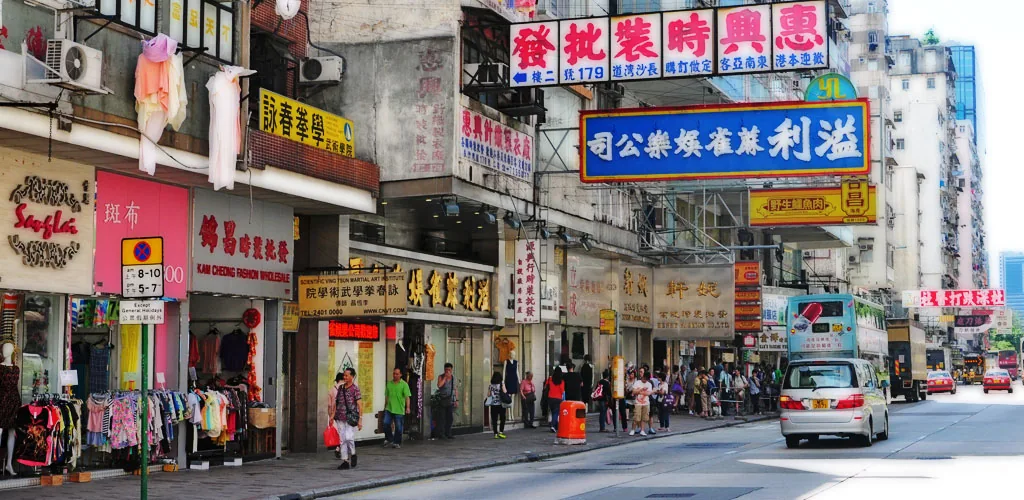
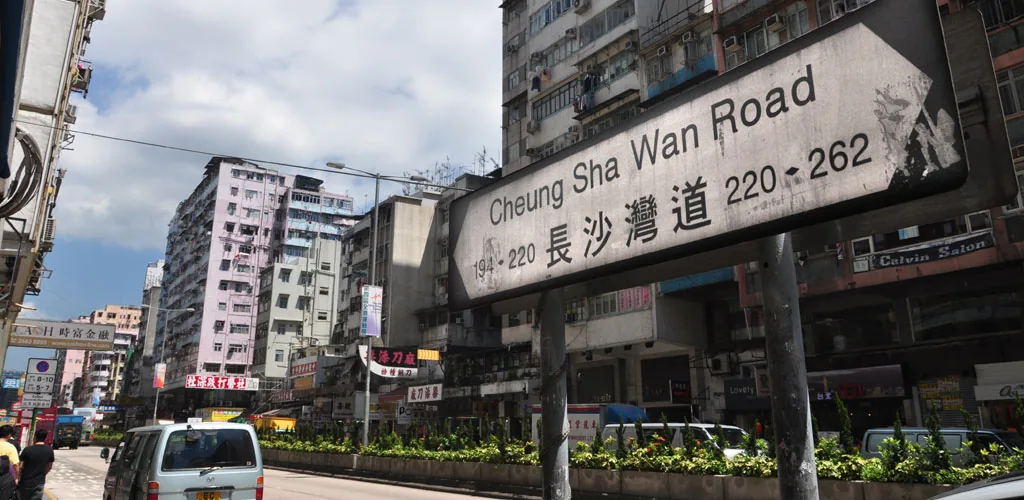
The three stops are close together and walkable in an afternoon, and they pair naturally with the Fashion Street wholesale corridor along Cheung Sha Wan Road. If you are combining the two, our wholesale market shopping guide covers the clothing side, and the industrial heritage guide explains how the district's manufacturing buildings fit around it.
Getting There
The workshops are in Sham Shui Po, served by Sham Shui Po Station on the Tsuen Wan Line. From the station it is a short walk to the Yen Chow Street / Yee Kuk Street area where the canvas shops are clustered. Keep the exit detail soft and follow station signage for Yen Chow Street — the streets are compact and signposted once you are above ground.
Our getting-here guide covers MTR routes, fares and airport connections, and the map page shows how the workshop streets sit in relation to the Fashion Street wholesale stretch.
Frequently Asked Questions
What is the red-white-blue bag?
It is a tough, inexpensive carryall made from woven nylon sheeting in red, white and blue — a classic of Hong Kong everyday life that the Hong Kong Tourism Board says is still widely seen across the city and has become an icon of Hong Kong culture.
Who makes the red-white-blue bags in Sham Shui Po?
Wah Ngai Canvas is credited by the Hong Kong Tourism Board as the birthplace of Hong Kong's classic red, white and blue bags. Its founder, Lee Wah, began hand-making the carryalls in the 1960s. Two neighbouring canvas workshops, Tsuen Kee Canvas and Sun Kee Canvas, work in the same trade on the same streets.
Where in Sham Shui Po can I buy one?
The canvas workshops are on and around Yen Chow Street and Yee Kuk Street. Wah Ngai Canvas is listed at 22 Yen Chow Street; Tsuen Kee Canvas at 219 Yee Kuk Street; and Sun Kee Canvas at 37 Yen Chow Street. Telephone ahead to confirm trading hours before a special trip.
How do I reach the canvas workshops?
Sham Shui Po Station on the Tsuen Wan Line is the nearest MTR station; the workshops are a short walk from it, close to the Cheung Sha Wan Road wholesale fashion stretch.
Related Guides
- Themed Streets of Sham Shui Po — beads, buttons, ribbon, toys and electronics streets
- Shopping on Cheung Sha Wan Road — categories, specialties and strategy
- Fashion Wholesale Market Shopping Guide — the clothing corridor
- Cheung Sha Wan Road Industrial Heritage Guide — the district's manufacturing past
- Getting Here by MTR — exits, fares and airport connections
- Map — where the workshop streets sit in the district
Sources: Hong Kong Tourism Board — "Wah Ngai Canvas" (discoverhongkong.com); Hong Kong Tourism Board — "Sham Shui Po: Self-guided Walks" guidebook (September 2023). Workshop listings reflect those sources; confirm current trading with each shop before visiting.